How a Merrillville Indiana startup is turning agricultural residue into high-performance materials—and why Indiana was the only place to do it
When the Indiana Economic Development Corporation released its 2025 Entrepreneurship Indiana Yearbook last month, FiberX was proud to be among the 100 entrepreneurs and companies featured. But as we read through the other stories—researchers turning blood coagulation studies into commercial ventures, tech founders building global platforms, manufacturers scaling breakthrough innovations—we were struck by a common theme.
Every one of these stories required taking a risk on something that didn’t exist yet.
For FiberX, that risk started with a question: What if Indiana’s most abundant agricultural byproduct could become one of its most valuable industrial resources?
The Problem We Saw
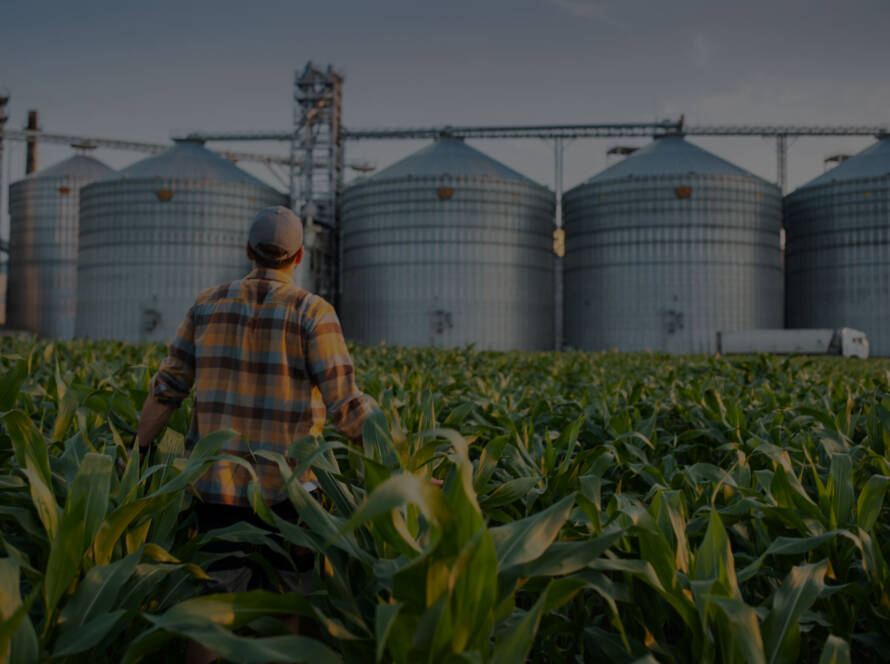
Indiana farmers harvest roughly a billion bushels of corn every year. That’s an impressive number, but here’s the one that caught our attention: those same farmers leave behind approximately 12 million tons of corn stover—the stalks, leaves, husks, and cobs that remain after harvest.
For decades, this material has been considered agricultural residue at best, a challenge at worst. High-yielding corn varieties produce so much stover that it can’t naturally decompose before the next planting season, forcing farmers to spend money on fertilizer and diesel fuel to manage it.
Meanwhile, the chemicals and materials industries consume 12% of the annual global oil supply, searching for renewable alternatives that can match the performance of petroleum-based materials without the cost penalties or production headaches.
We saw an opportunity to solve both problems at once.
Why Indiana, Why Now
When Dave Skibinski founded FiberX in 2022, the decision to locate initially in Hammond wasn’t just about being close to corn fields—though Indiana’s position as the fifth-largest corn-producing state certainly helped.
Now in Merrillville, this town sits at the crossroads of everything we need: agricultural abundance, manufacturing expertise, transportation infrastructure, and access to world-class research institutions. The area’s history as a heavy industry region means we have access to chemical engineers and manufacturing professionals who understand complex production processes.
Just as importantly, we found an entrepreneurial ecosystem willing to support something new.
“We are creating a new industry, founded in Indiana, with a new company and with new products that have never been introduced to the world before,” Dave explains in the IEDC yearbook feature. That’s not marketing language—it’s the truth. What we’re doing hasn’t been done at this scale before.
The partnership with Purdue University’s School of Chemical Engineering gave us access to cutting-edge lignin extraction and depolymerization technology. The Indiana Corn Growers Association connected us with farmers. AgriNovus Indiana opened doors across the ag-bioscience sector. And the IEDC’s Innovation Voucher Awards—we’ve received four of them—provided critical non-dilutive funding to advance our technology from concept to commercial reality.
What We’ve Built
Three years in, here’s what that risk has produced:
Industrial-Scale Processing – Our Merrillville facility now processes 8,000 pounds of corn stover per hour, transforming baled stover into microfibers and powders that meet industrial specifications. We’ve automated the entire process, from bale intake through final packaging.
Proven Product Performance – Our FBX Fiber has replaced up to 50% of native synthetic polypropylene in biocomposite plastics, making finished products twice as strong and more rigid while reducing costs. We’ve developed successful formulations with polypropylene, polyethylene, and emerging biopolymers like PHA and PLA.
Supply Chain Infrastructure – We’ve harvested 3.4 million pounds of stover and built relationships with custom balers and farmers across the region. Our model creates a new revenue stream for farmers—turning what was once a cost center into a cash crop—while responsibly harvesting only 25-50% of the stover from any field, leaving plenty for soil health and erosion control.
Customer Pipeline – Multiple manufacturers are testing our materials for applications ranging from durable consumer goods to biodegradable food packaging. One customer is in contract negotiation for a multi-million-dollar agreement. Others are working through product testing and evaluation phases.
Technology Development – We’re advancing lignin-first biorefinery technology that breaks corn stover down into three valuable components: depolymerized lignin (for resins, adhesives, and coatings), cellulose (for biocomposites and textiles), and hemicellulose (for biofuels and films). This technology, developed at Purdue and being commercialized by FiberX, opens up an $850+ billion total addressable market across multiple industries.
What Makes It Work
The article author, Michael Gonzalez, captures something important about our approach: we’re not asking manufacturers to sacrifice performance for sustainability. Our materials compete on strength and price, with sustainability as an added benefit.
“Those powders can be added to plastics, making them twice as strong and 50 percent more rigid,” Gonzalez writes. “When we work with bioplastics, and we help them reduce their costs of goods, which opens new markets because their products can be more competitive in the plastics industry.”
This matters because it’s sustainable. Not in the environmental sense—though that’s true too—but in the business sense. Products that only succeed because of green premiums or regulatory mandates have limited markets. Products that win on performance and economics can scale.
We’re also doing “the dirty work” that others won’t. Building a corn stover supply chain from scratch means figuring out harvest timing, moisture management, transportation logistics, storage solutions, and processing techniques that didn’t exist before. It’s complex, it’s messy, and it creates competitive advantages that can’t be easily replicated.
The Bigger Picture
Being featured in the Entrepreneurship Indiana Yearbook alongside 99 other companies reminds us that we’re part of something larger than FiberX.
Indiana is building a reputation as a place where hard problems get solved. The state’s “both/and” approach—supporting both Main Street manufacturing and venture-backed deep tech—creates unique opportunities for companies like ours that sit at the intersection of traditional industry and breakthrough innovation.
The IEDC’s recognition of entrepreneurship isn’t just about celebrating success stories. It’s about building an ecosystem where more of these stories become possible. ConnectIND connects founders with resources. The Legend Fund provides small business lending with a focus on underserved entrepreneurs. Regional partnerships bring together universities, industry, and government to solve specific challenges.
For FiberX, this ecosystem has been invaluable. We’ve accessed university research, connected with potential customers, secured non-dilutive funding, and found team members who believe in the mission. That infrastructure makes risky ventures less risky.
What’s Next
The work featured in the yearbook represents our foundation. Now we’re building on it.
We’re finalizing contracts with our first major customers and expanding production capacity to meet demand. We’re advancing our biorefinery technology from R&D to pilot scale, with our fourth IEDC Innovation Voucher Award supporting that transition. We’re adding team members—we’re at seven now and growing—to scale operations and accelerate product development.
We’re also thinking about what comes next. The lignin technology opens doors to markets far beyond plastics: resins for construction, adhesives for manufacturing, coatings for protection, aromatic chemicals for industrial applications. Each represents a significant opportunity to displace petroleum-based materials with sustainable alternatives that perform as well or better.
The potential is enormous. The challenge is execution.
Thanks Are Due
Success in entrepreneurship is never solo work. The IEDC’s recognition of FiberX is really recognition of an extended team:
The farmers who took a chance on creating a new supply chain and partnered with us to figure out the logistics.
The researchers at Purdue University who developed breakthrough technology and trusted a startup to commercialize it.
The customers who are testing our materials and providing the feedback that makes them better.
The investors—Jacaranda Partners, Purdue Innovation Ventures, Elevate Ventures, and our Seed-1 round participants—who believed in the vision before we had revenue.
The team members who show up every day to process tons of stover and solve problems that don’t have textbook answers.
And the Indiana entrepreneurial ecosystem that provides infrastructure, connections, and support for companies trying to build something new.
An Invitation
If you’re a manufacturer looking for sustainable materials that don’t compromise on performance or price, let’s talk.
If you’re a farmer interested in creating a new revenue stream from corn stover, we’d love to connect.
If you’re an entrepreneur trying to build something difficult in the Midwest, welcome to the neighborhood. Indiana’s ecosystem is stronger when we all succeed.
And if you’re curious about what’s possible when agricultural abundance meets industrial innovation, keep watching. We’re just getting started.
Read the Full Yearbook
Download the IEDC’s 2025 Entrepreneurship Indiana Yearbook to learn about FiberX and 99 other Indiana entrepreneurs building the future: iedc.in.gov/entrepreneurship/success-stories
Want to learn more about how FiberX’s lignin technology could benefit your applications? Contact our team to discuss your specific requirements and explore partnership opportunities.